Westholme Wagyu
“Food stops being just something you consume and becomes part of a story.”
.jpeg)
.jpeg)

According to you, do people experience something differently because of where it comes from?
Yes, absolutely. Provenance shapes expectations, but it also genuinely changes the product itself.
When people understand the story behind a product, they connect with it differently. They pay more attention, and there is naturally more emotion attached to the experience.
I think people are increasingly looking for authenticity. When they know where something comes from, who produced it, and how it was made, the experience becomes more emotional and more memorable. Food stops being just something you consume and becomes part of a story.
.jpeg)
“When products are seasonal you look forward to them”

Has seasonality changed the way you think about eating over time?
Yes, definitely. Probably because I appreciate patience more now than I used to.
When products are seasonal, you look forward to them. There is anticipation, and I think that makes the experience even better.
Working in food has made me realise even more that nature has its own rhythm, and usually the best products come when you respect that timing rather than trying to force it.
What’s lost when everything becomes available all year round?
A bit of excitement, honestly.
If everything is always available, food can become more routine and a little less emotional.
I also think we lose some connection with nature, and with the idea of waiting for something. Some products feel special precisely because they are not always there.
What part of bringing Westholme Pure Wagyu to life can’t be rushed?
Time.
There really is no shortcut when producing exceptional Wagyu. The animal needs years to develop naturally, and patience is essential from beginning to end.
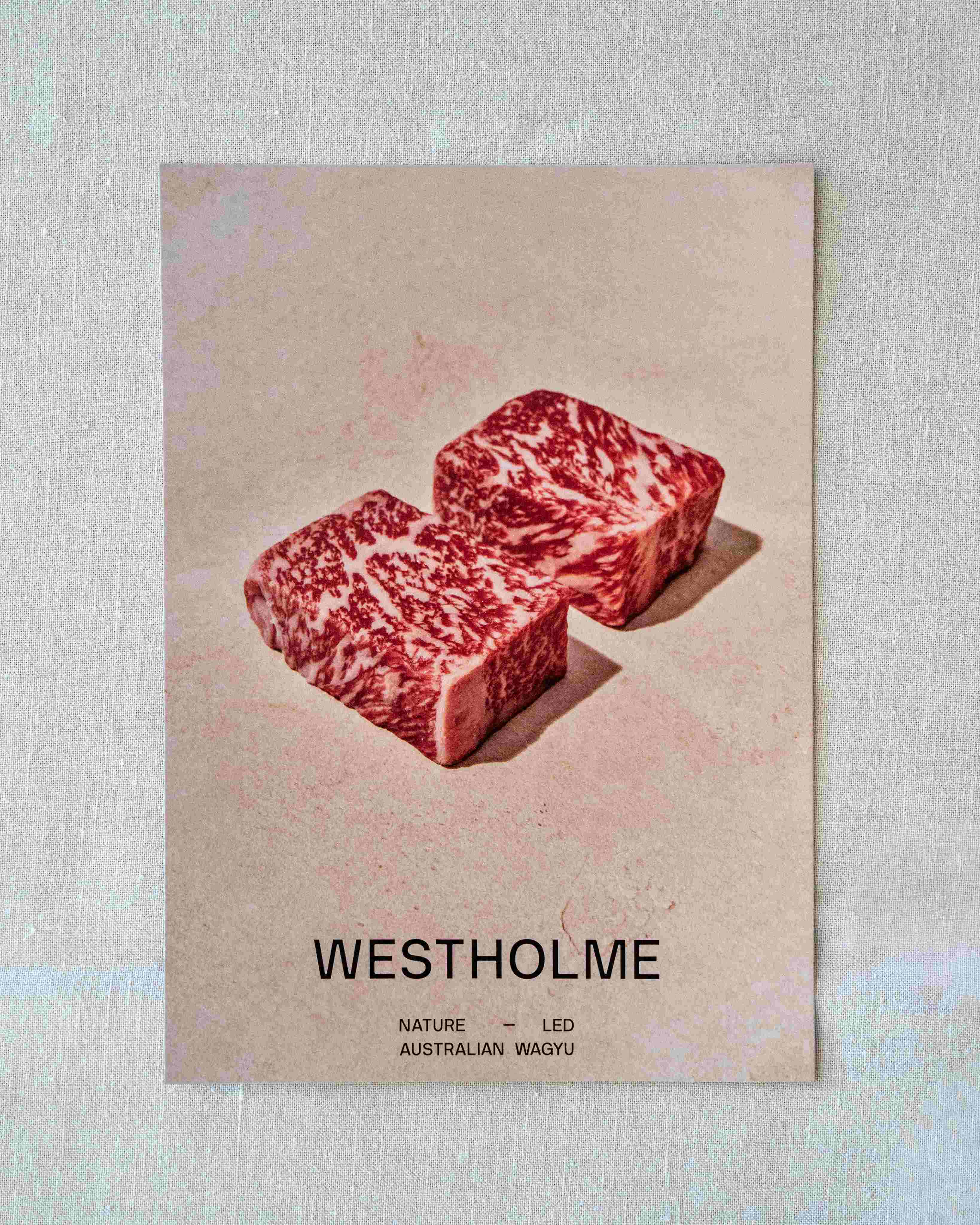
The marbling itself is the result of time, consistency and care over the entire life of the animal.
Great beef is built slowly. Genetics matter, feeding matters, the environment matters, but time is what allows everything to come together.


What part of the process do people rarely see or understand?
Probably the level of consistency and attention required over such a long period of time.
People see the final steak, but they do not always realise how much happens long before that. The genetics, the environment, the feeding program, animal care, every detail matters.
And even then, consistency is incredibly difficult. Producing outstanding quality once is one thing. Doing it year after year is something else entirely.
What food memory has stayed with you the longest?
I come from a big family with seven siblings, and both of my parents were working full-time. So I do not necessarily remember one specific dish from childhood. The priority at home was usually finding the easiest and quickest way to feed eight kids.
What I do remember very clearly are the moments when we were all around the table together. You learned pretty quickly to take enough the first time, because there probably would not be a second round.
Even now, every couple of years, we all get together again for a big family meal. And honestly, I probably will not remember exactly what was served, but I will always remember the feeling of being together and sharing that meal.

@westholme

Champagne Paul Goerg
“The finest experiences are rooted in place, season and patience.”